Juneteenth 2026
- Jun 19
- 4 min read
A Heartwood Collective note - Juneteenth 2026
Juneteenth marks the day in 1865 when news of emancipation finally reached the last enslaved people in Texas, more than two years after the Emancipation Proclamation was signed. Freedom on paper, and then, slowly, freedom in fact. The distance between those two things is what I find myself sitting with today.
I sell homes for a living, so I think about that distance in a particular way. Legal freedom arrived in 1865. Economic freedom, the kind built by owning the ground under your feet and passing it down to your children, is still arriving, unevenly, more than a century and a half later.
The number behind the holiday
As of late 2025, about 44% of Black households owned their homes, against roughly 75% of white households. That gap of nearly 30 points is actually wider than it was in 1970, just after the Fair Housing Act outlawed much of the discrimination that created it. Among millennials the divide is starkest: roughly a third of Black households own, versus two-thirds of white ones. And over the past year the Black homeownership rate didn't simply stall, it slipped.
Massachusetts is no exception. Our gap is among the widest in the country, driven hard by affordability. When a starter home in these towns clears three-quarters of a million dollars, families with generational equity to draw on hold an enormous head start, and families who were locked out of that equity for generations fall further behind.
I don't raise this to lecture. I raise it because it's the honest backdrop to what Juneteenth celebrates, and because a home remains the single largest engine of wealth most American families will ever touch.
Why the gap matters
This isn't only a question of fairness in the abstract. A home is the main store of wealth most families ever build, so a gap in who gets to own becomes a gap in who gets to accumulate anything at all. In 2022 the median white family held roughly $285,000 in net worth; the median Black family, about $44,000. Home equity is the single largest piece of that difference. And equity is never abstract: it's the down payment you help a child with, the cushion that carries a household through a layoff or a medical bill, the collateral behind a new business, the inheritance that gives the next generation a head start. When a family is locked out of ownership for generations, it isn't one missed purchase, it's decades of compounding that simply never happened.
The social consequences run just as deep. Where you can afford to own determines which schools your children attend, how secure your housing is, and whether you're putting down roots or living one rent increase away from moving again. Ownership is tied to neighborhood stability, civic participation, and even long-term health. A gap in who gets to own quietly becomes a gap in who gets to stay, and staying is how communities, and family stories, are built.
Seeing the history where we live
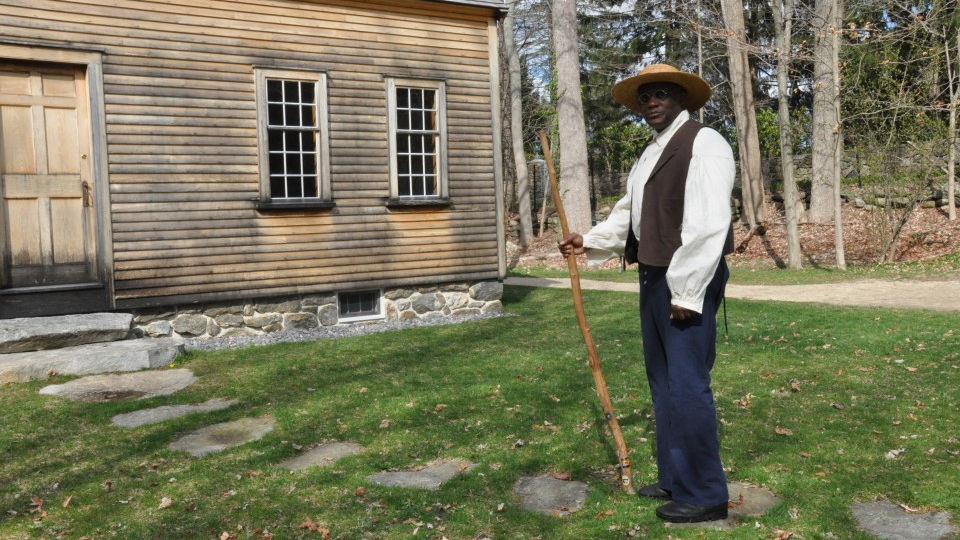
We don't have to look far for the history. The Robbins House in Concord is the restored home of the descendants of Caesar Robbins, a formerly enslaved man who fought in the Revolution, and today it stands as a center for African American history. This Friday it hosts Concord's fourth annual Juneteenth celebration.
But the Robbins House is one chapter of a much longer story written across these towns. In 1785, Brister Freeman, who won his freedom through Revolutionary War service, pooled his money with another formerly enslaved man to buy land in Walden Woods, becoming one of the first Black property owners in Concord. The ground he farmed is preserved today as Brister's Hill. He belonged to a Black community that took root here well before Thoreau ever walked Walden, with enclaves at the Great Field and the Dugan neighborhood, all of them now stops on Concord's Black Heritage Trail.
And the story isn't Concord's alone. Recent local research has begun documenting the enslaved men, women, and children held in Sudbury and Wayland by some of those towns' most prominent early families, a reminder that this past is woven through nearly every old village in our area, often in houses still standing and lived in today.
That a modest house like the Robbins House became a monument is the whole point. Homes hold history. They hold equity and memory and belonging, and the simple proof that a family was here and stayed.
Where to celebrate this year
Concord's Robbins House festival is the anchor event in our area: a flag raising in the morning, then live music, performances, and food trucks on the house's lawn from noon to three. It's free and joyful, and worth your time. If you'd rather explore at your own pace, Concord's Black Heritage Trail and the town's self-guided African American history walking tour connect many of the sites above, and you can walk them any day of the year. The Museum of Fine Arts in Boston is free to all Massachusetts residents on June 19, and several MetroWest libraries and cultural organizations host readings and programs as well, so it's worth checking your own town's calendar, since schedules firm up close to the day.
Freedom that took until 1865 to be honored, and equity that is still being earned, both deserve to be remembered. The work I care about is helping more families cross from freedom on paper to a deed with their own name on it.
Wherever you call home across these towns, I hope today is a meaningful one, and I'm always glad to talk about putting down roots of your own.
Homeownership figures sourced from the National Association of Realtors and U.S. Census data, June 2026. Event and site details from the Town of Concord, Visit Concord, and The Robbins House. Data shifts quickly; reach out for current numbers on a specific home or neighborhood.