Weston's Home Styles in 2026
- Jun 25
- 2 min read
A Heartwood Collective hyperlocal market note - Weston, Massachusetts
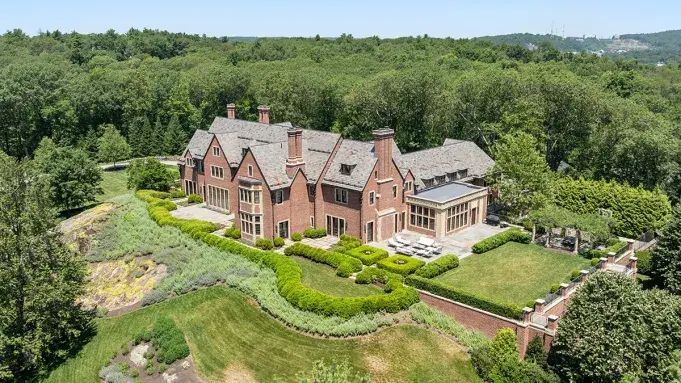
Drive the length of Boston Post Road and you can read three centuries of Weston in the houses. A 1768 Georgian tavern with a center chimney sits a few miles from a 1955 ranch, which sits down the road from a just-finished estate with a four-car garage. Most towns have a look. Weston has a timeline. If you're buying, selling, or simply trying to understand the home you already own, knowing where your house falls on that timeline tells you a lot about what it's worth and what it needs.
The antiques: Post Road colonials and Georgians
Weston grew up along the Boston Post Road, used as a post road since 1673, and incorporated as a town in 1713. The Boston Post Road Historic District, on the National Register since 1983, holds homes and taverns spanning roughly 250 years. The Golden Ball Tavern (1768) and Josiah Smith Tavern (1757) are the textbook examples: two-story, five-bay Georgians with center chimneys and symmetrical fronts.
If you own one of these, you own a piece of the town's identity, and a maintenance calendar to match. Buyers love the character, and they should also budget for the systems behind it. Antique homes reward owners who plan for restoration rather than react to it.
The mid-century middle: ranches, capes, and split-levels
Here is the fact that surprises people. About half of Weston's houses were built between 1940 and 1979. Roughly 22% predate 1939, another 25% are 1940s and 50s, and 25% are 1960s and 70s. Only about 9% have gone up since 2000. So the typical Weston house isn't a brand-new mansion. It's a solid mid-century home on a generous lot.
For buyers, this is where value lives. These homes sit on the same protected, low-density land as the headline estates but trade well below the town's $2.7 million median. For owners, a thoughtful renovation often beats a teardown on both cost and character.
The new estates: land, rebuilt
New construction in Weston usually means land, rebuilt. With older stock and roughly 20% of the town in conservation, builders buy, take down, and replace. New homes routinely sell above $700 per square foot. What makes them possible is the same thing that makes Weston Weston: large lots. The town's Single Family Residence Districts carry minimums up to two acres (87,120 square feet) and frontage requirements as wide as 200 feet.
That zoning is why inventory stays tight, and why a well-kept older home holds its value even as new builds set the ceiling.
What it means in 2026
Weston is competitive right now. Homes are selling in about 24 days at roughly 97% of list price, with the three-month median up 12.7% over last year. Whichever era your house belongs to, the move is the same: price it to its real condition and lot, not to the listing down the street that happens to be brand new.
Whether you're weighing a Post Road antique or a new build off a quiet cul-de-sac, I'd love to walk Weston with you.
Market figures sourced from Redfin and Zillow, with zoning and housing-stock data from the Town of Weston, June 2026. Data shifts quickly; reach out for current numbers on a specific home or neighborhood.